
KNOWLEDGE CENTRE · ARTICLE
Are Fish Oil and Omega-3 the Same?
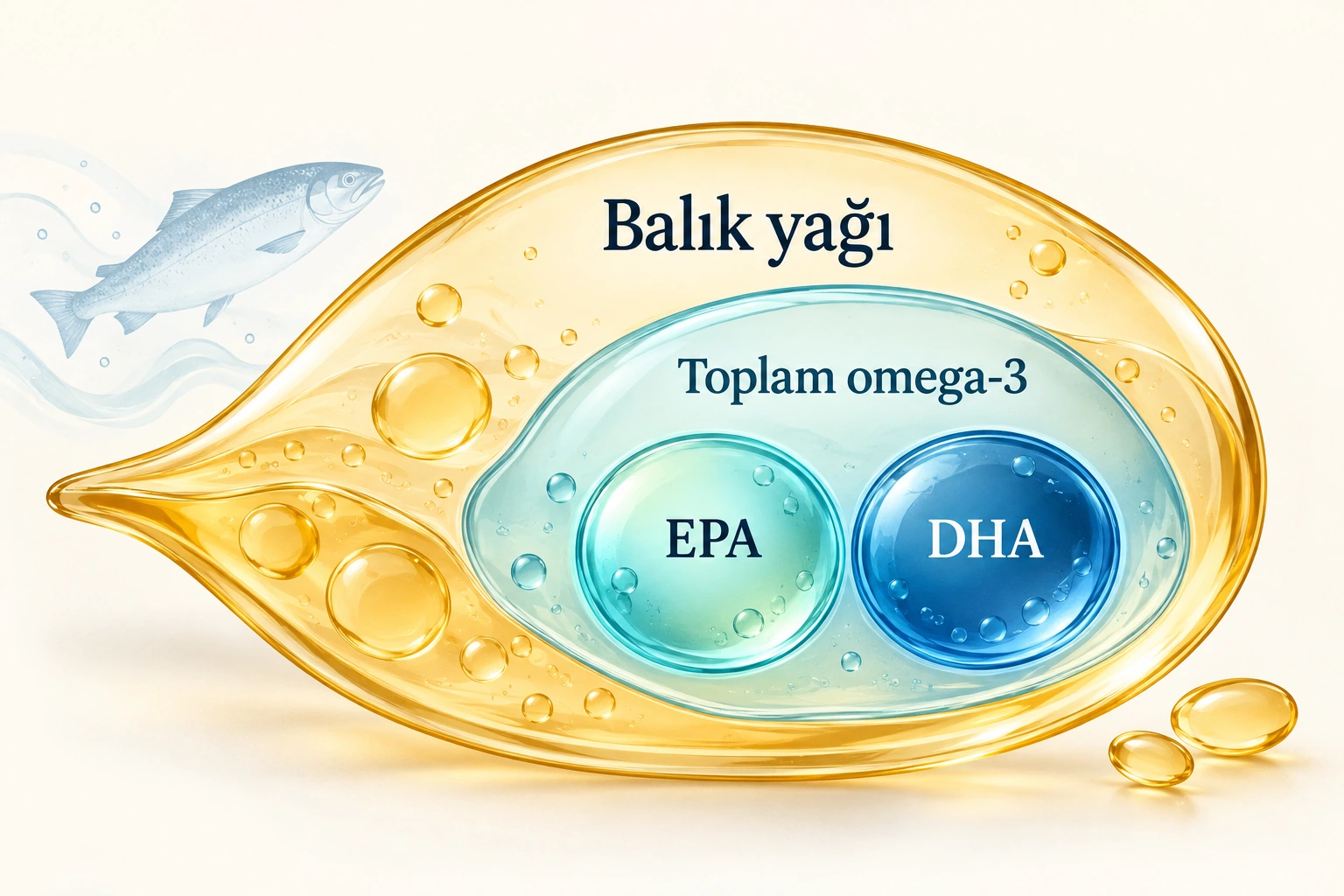
Fish oil and omega-3 are not the same. Fish oil is the total oil, containing different fatty acids. Omega-3 is a specific group of fatty acids within that oil. Read EPA and DHA values alongside the total fish oil amount on the label.
The short answer
Fish oil and omega-3 are related but different concepts.
Fish oil is the raw material containing different fatty acids, including EPA and DHA.
For example:
1000 mg fish oil describes the total oil raw material; the omega-3 amount describes its omega-3 portion.
To find the actual omega-3 amount, check the label separately for total omega-3, EPA and DHA values.
What is fish oil?
Fish oil is an oil mixture obtained from oily fish tissues.
It may contain:
- EPA,
- DHA,
- other omega-3 fatty acids,
- omega-6, omega-9 and other oil components
Refining and standardisation determine the product's total EPA/DHA amount.
What does “total omega-3” mean?
Total omega-3 is the combined amount of omega-3-family fatty acids in the product.
EPA and DHA may account for a substantial portion; depending on the product, other omega-3 fatty acids may also be included.
Example: Vitallin Omega-3
Per softgel:
- fish oil: 1000 mg
- total omega-3: 680 mg
- EPA: 360 mg
- DHA: 240 mg
are present.
Here, 1000 mg fish oil and the label's total omega-3 amount are two different values.
EPA + DHA = 600 mg. Total omega-3 is 680 mg; the difference consists of other omega-3 fatty acids.
Example of a children's product
Per 5 ml of Vitallin Kids Omega-3:
- fish oil: 1300 mg
- total omega-3: 910 mg
- DHA: 650 mg
- EPA: 195 mg
are present.
This example shows the same distinction.
What should be considered when comparing products?
Compare the composition as well as the total milligram value on the front of fish oil products.
Practical checklist:
- serving size,
- fish oil amount,
- total omega-3,
- EPA,
- DHA,
- chemical form,
- quality and purity information.
Why is triglyceride form listed separately?
Omega-3 fatty acids can be supplied in different chemical structures.
In triglyceride form, the fatty acids are attached to a glycerol structure.
This technical property helps explain the composition when reading labels; clinical assessment considers dose, form and purpose of use together.
What matters when comparing omega-3 products?
Actual EPA and DHA amounts, product form and the recommended daily serving matter alongside total oil quantity.
Reading Vitallin Omega-3's label values together—1000 mg fish oil, 680 mg total omega-3, 360 mg EPA and 240 mg DHA—clarifies the composition profile.
Triglyceride (TG) form is another technical specification. Assessment should be based on the product's own ingredients and label data.
Conclusion
In summary: Fish oil describes the entire raw material; total omega-3 combines EPA, DHA and other omega-3 fatty acids.
What this means in daily life: Reading fish oil, total omega-3, EPA and DHA amounts separately enables more informed comparisons.
What research shows: Amounts are assessed alongside chemical form, quality parameters and purpose of use.
Explore more: To compare the two main omega-3 fatty acids, read What Is the Difference Between EPA and DHA?
Frequently Asked Questions
Is 1000 mg fish oil the same as 1000 mg omega-3?
1000 mg fish oil describes the total oil raw material; the omega-3 amount is listed separately on the label.
How much EPA and DHA should fish oil contain?
Appropriate amounts are assessed alongside purpose, target population and daily serving.
Is total omega-3 the same as EPA+DHA?
Total omega-3 may include other omega-3 fatty acids as well as EPA and DHA.
Is more fish oil better?
The fish oil amount becomes meaningful when assessed alongside EPA/DHA concentration.
Related Vitallin products
Both product pages list fish oil, total omega-3, EPA and DHA separately.
Information Note
This content is for general information and educational purposes. It is not a substitute for medical advice, diagnosis or treatment. Consult your physician or the relevant healthcare professional for an assessment of your personal health.
References
- Current Vitallin Omega-3 and Kids Omega-3 product brochures and label data.
- Dighriri IM, et al. Cureus. 2022;14:e30091. DOI: 10.7759/cureus.30091.