
KNOWLEDGE CENTRE · ARTICLE
What Is the Difference Between EPA and DHA?
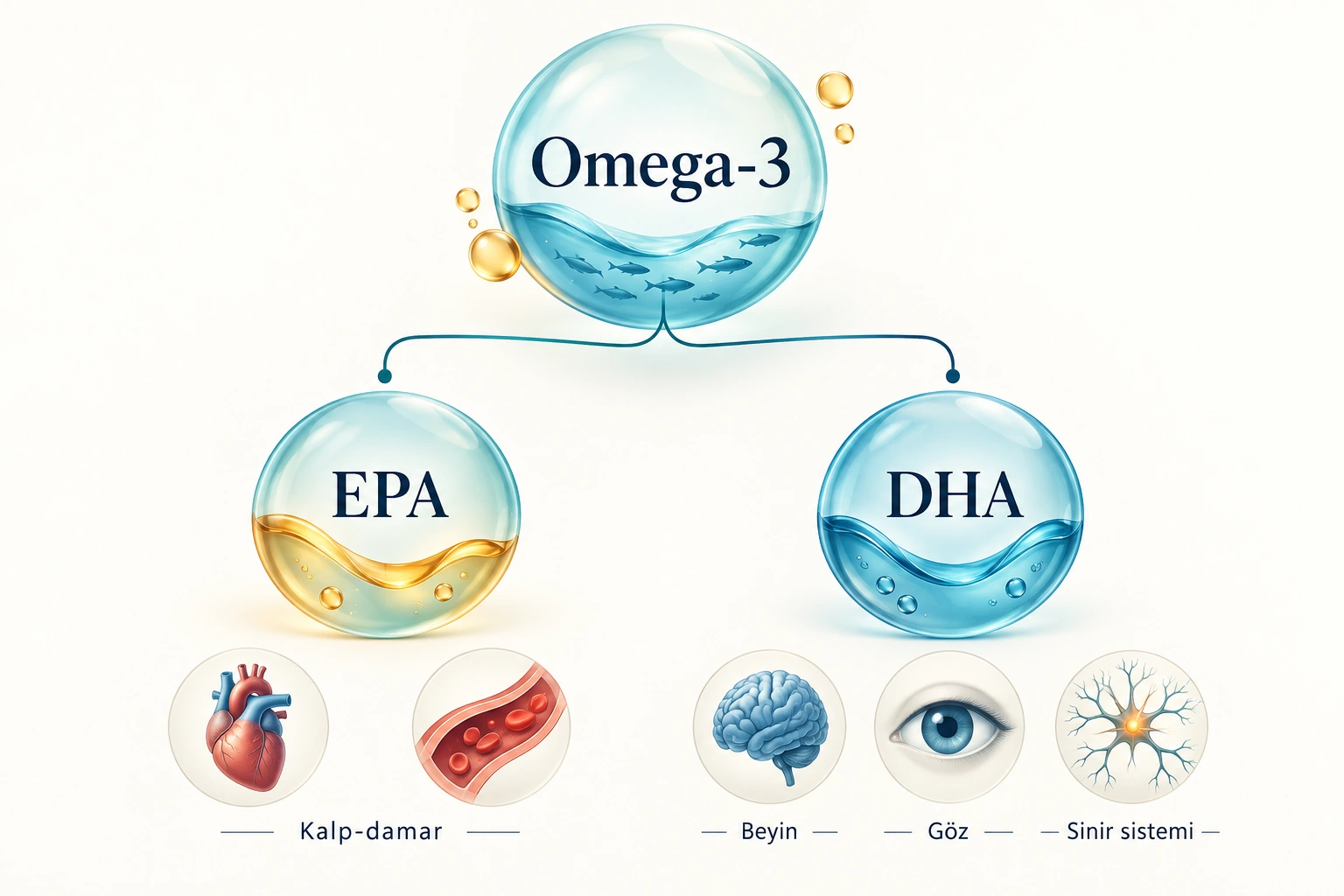
Although in the same omega-3 family, EPA and DHA have different prominent functions:
The short answer
EPA (eicosapentaenoic acid) is a precursor to lipid signalling molecules, prominent particularly in cardiometabolic research.
DHA (docosahexaenoic acid) is a structural fatty acid abundant in brain and retinal membranes.
Human studies often combine them, assessing both shared effects and their differing areas of prominence.
Why does the structural difference matter?
EPA has 20 carbons; DHA has 22.
This difference affects:
- membrane incorporation,
- enzymatic metabolism,
- lipid mediator formation
and other biological properties.
Which research areas emphasise EPA?
EPA:
- cardiovascular outcomes,
- triglyceride metabolism,
- inflammation-related lipid mediators
are extensively studied areas.
High-dose EPA monotherapy has shown notable results in some high-risk cardiovascular patients.[1]
These studies explain EPA's separate investigation; daily products are assessed through their own EPA+DHA amounts and directions.
Which research areas emphasise DHA?
DHA:
- brain structure,
- retina,
- neurodevelopment,
- cognitive performance
are prominent research areas.
Child and adolescent studies report mixed cognitive findings.[2]
How do EPA and DHA complement one another?
They are distinct, complementary omega-3 fatty acids. DHA is structural in brain and retinal membranes; EPA is prominent in cellular signalling and lipid metabolism research.
Separate amounts clarify a product's fatty acid profile. Vitallin Omega-3 provides a balanced composition of 360 mg EPA and 240 mg DHA.
How should the label be read?
Look for four separate values in an omega-3 product:
- fish oil amount,
- total omega-3,
- EPA,
- DHA.
EPA+DHA may not equal total omega-3, as other omega-3 fatty acids may be present.
Different ratios in Vitallin products
Per Vitallin Omega-3 capsule:
- EPA 360 mg
- DHA 240 mg
are present.
Per 5 ml of Vitallin Kids Omega-3:
- DHA 650 mg
- EPA 195 mg
are present.
The EPA:DHA profiles therefore differ by target population and formulation.
This reflects EPA and DHA's prominence in different physiological roles.
What does science tell us?
- EPA and DHA are different long-chain omega-3 fatty acids.
- EPA is more prominent in lipid mediator and cardiometabolic research.
- DHA is more prominent in nervous system and retinal structure.
- High doses in disease studies are assessed in their clinical research context.
- Read EPA/DHA amounts separately when assessing products.
Frequently Asked Questions
Are EPA and DHA the same omega-3?
They are different fatty acids in the same family.
DHA or EPA for the brain?
DHA is structurally more abundant in brain cell membranes, but studies often combine them.
EPA or DHA for the heart?
Both have been studied cardiovascularly. High-dose EPA monotherapy forms a separate evidence base explaining EPA's role in this area.
What should the ratio be?
EPA:DHA ratio varies by purpose, population and formulation.
Related Vitallin products
References
- Khan SU, et al. EClinicalMedicine. 2021;38:100997. DOI: 10.1016/j.eclinm.2021.100997.
- van der Wurff ISM, et al. Nutrients. 2020;12(10):3115. DOI: 10.3390/nu12103115.
Information Note
This content is for general information and educational purposes. It is not a substitute for medical advice, diagnosis or treatment. Consult your physician or the relevant healthcare professional for an assessment of your personal health.