
KNOWLEDGE CENTRE · ARTICLE
What Is a Probiotic Strain? Are All Probiotics the Same?
Not all probiotics are the same bacteria; even two strains of the same species may have different properties. It is therefore important to look at the microorganism's full identity, beyond a statement that a product “contains probiotics”.
A strain code identifies the specific microorganism used as an ingredient. It also helps identify studies that directly investigated that strain. Vitallin Enteromax selects defined, traceable strains with a known identity, making it possible to interpret scientific data accurately at both species and strain level.
The short answer
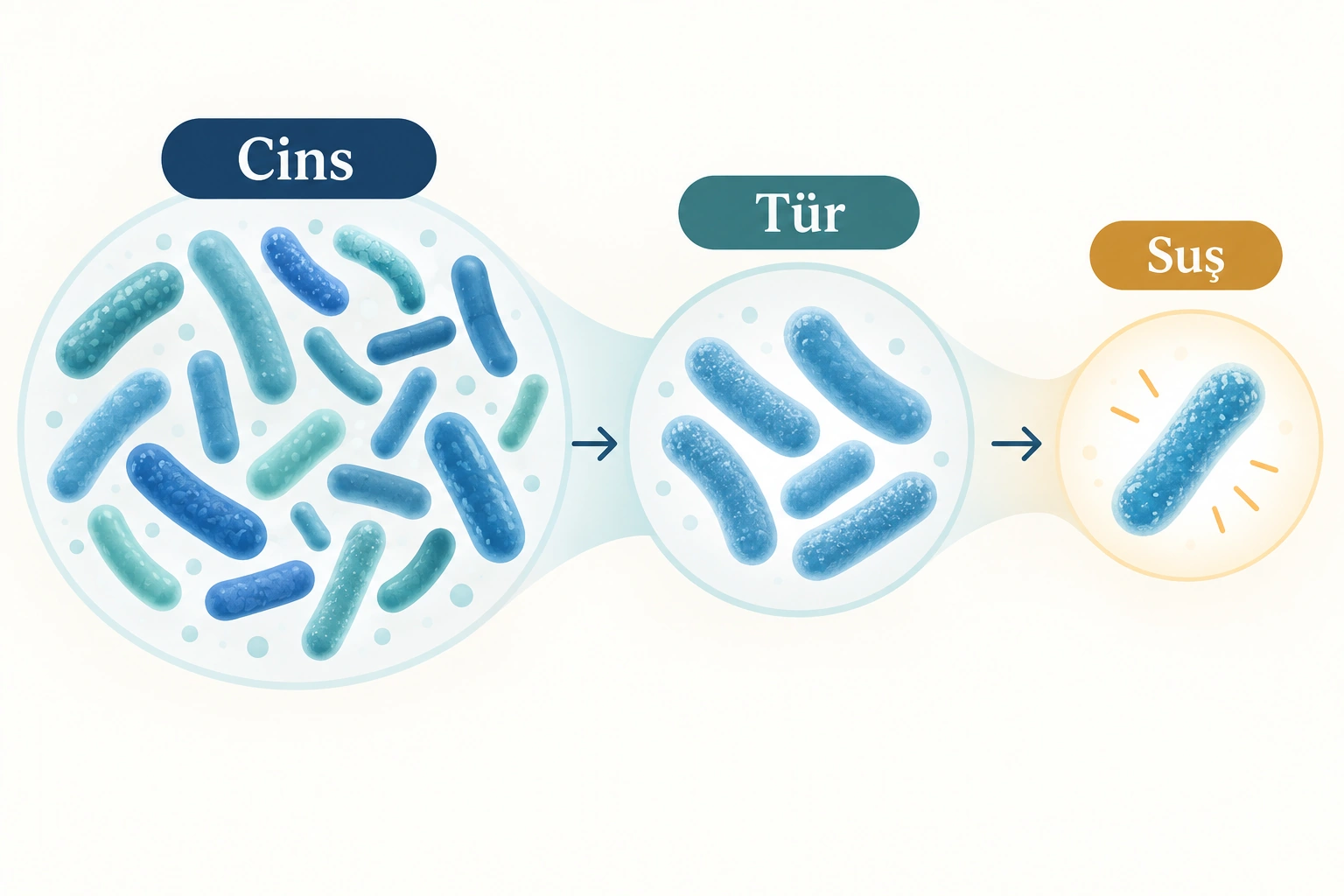
A bacterium's scientific identity has several levels:
Genus → species → strain
For example:
- Lacticaseibacillus = genus
- Lacticaseibacillus rhamnosus = species
- Lacticaseibacillus rhamnosus LRa05 = specific strain
Strains of the same species may share similar properties, yet each has distinct genetic and biological characteristics. Clinical studies should therefore be considered alongside the code of the strain studied.
What does strain mean?
A strain is a lineage of microorganisms within a species, identified by specific characteristics.
Just as individuals of the same human species differ, different strains of the same bacterial species may have distinct genetic and biological characteristics.
Strains may differ in their:
- resistance to acid and bile,
- ability to adhere to surfaces,
- metabolite production,
- interactions with other microorganisms,
- clinical effects
Why does a strain code matter?
A strain code allows us to trace the identity of the microorganism used in a scientific study.
For example, saying “L. rhamnosus was used” identifies only the species.
“L. rhamnosus LRa05 was used” identifies the specific microorganism that was studied.
This distinction makes clinical evidence traceable.
Why do different strains of the same species matter?
A bacterium's genus and species name identify its microorganism group. Its strain code helps identify the specific microorganism within that species.
This distinction makes it possible to match probiotics with scientific research. Clearly displaying defined strain codes in Enteromax strengthens the traceability of the microorganisms used.
How can Enteromax strains be interpreted scientifically?
The strain codes in Enteromax allow the microorganisms in the formulation to be matched with the scientific literature.
Studies using the same strain
When the strain in a study matches the strain in the product, the findings form part of that strain's direct research history.
Examples:
- LA85
- LRa05
- BL21
- RC-14, preserving the context of the combination studied
- LC86, distinguishing human from preclinical studies
- Lp90, distinguishing in vitro from preclinical studies
What do species-level studies tell us?
Species-level studies show the biological and clinical areas in which different strains of the same species have been investigated. B. animalis subsp. lactis has been investigated in human studies of bowel movements and stool frequency using strains such as BB-12 and HN019.[1][2] Enteromax contains the BIO5764 strain of the species that shares this scientific background.
Why are combination studies evaluated separately?
In combination studies, the findings describe the joint formulation of the strains used. For example, when RC-14 and GR-1 are studied together, the results are evidence for that specific pair. These studies enrich the scientific background of multi-strain approaches and the rationale for combining different strains.
Why is it valuable to display strain codes?
Displaying the strain code makes it easier to:
- match the product with the scientific literature,
- track safety data,
- verify clinical studies,
- understand differences between products
When a probiotic product makes a claim based on scientific evidence, the question of which strain was studied becomes particularly important.
Which matters more: the billion count or the strain?
Strain identity and live microorganism count are two complementary criteria.
The CFU count is meaningful when considered alongside strain identity and research history. Evaluating a product therefore involves both the number of live microorganisms and the strains contributing to that count, including the areas in which they have been studied.
The right question is:
Which strain + what amount + what intended use + what evidence?
Conclusion
In summary: A strain code identifies a specific probiotic microorganism and enables a traceable connection with scientific research.
What this means in daily life: Seeing the strain code alongside the species name on a label helps you understand the product's identity, amount and scientific background more clearly.
What research shows: Species-level studies provide biological context; clinical findings should, wherever possible, be considered in relation to the strain and combination studied.
Explore more: To learn how multiple strains are considered within one formulation, see What Does Multi-Strain Probiotic Mean?
Frequently Asked Questions
What is a probiotic strain code?
It is a code or name identifying a specific microorganism lineage. Examples include LRa05, LA85 and BB-12.
Are different strains of the same species identical?
Different strains of the same species may differ in their genetic, metabolic and clinical properties.
What does a study of one strain tell us about the species?
A study of one strain forms part of that strain's direct research history. For other strains of the same species, it provides scientific background on the biological and clinical areas in which the species has been investigated.
What does a BIO code mean?
It identifies the specific commercial or manufacturer-designated strain used in the product. Studies using the same code form part of that strain's direct research history; studies of other strains of the same species describe the species' broader scientific background.
How should the number of probiotic strains be interpreted?
The number of strains is meaningful when considered alongside their identities and the live microorganism count. Clear strain codes improve ingredient transparency.
Related Vitallin product
The product page for Enteromax Capsules explains its multi-strain formulation, which combines 12 microorganisms with clearly identified strain codes.
Information Note
This content is for general information and educational purposes. It is not a substitute for medical advice, diagnosis or treatment. Consult your physician or the relevant healthcare professional for an assessment of your personal health.
This content is provided for general information and education; it does not replace medical advice.
References
- Eskesen D, Jespersen L, Michelsen B, et al. Effect of the probiotic strain Bifidobacterium animalis subsp. lactis, BB-12, on defecation frequency in healthy subjects with low defecation frequency and abdominal discomfort. British Journal of Nutrition. 2015;114:1638-1646. DOI: 10.1017/S0007114515003347.
- Ibarra A, Latreille-Barbier M, Donazzolo Y, et al. Effects of 28-day Bifidobacterium animalis subsp. lactis HN019 supplementation on colonic transit time and gastrointestinal symptoms in adults with functional constipation. Gut Microbes. 2018;9(3):236-251. DOI: 10.1080/19490976.2017.1412908.
- Hill C, Guarner F, Reid G, et al. ISAPP consensus statement on the scope and appropriate use of the term probiotic. Nature Reviews Gastroenterology & Hepatology. 2014;11:506-514. DOI: 10.1038/nrgastro.2014.66.