
KNOWLEDGE CENTRE · TOPIC HUB
Gut Microbiota and Probiotics
Busy routines, intense work stress, irregular eating and antibiotic use can affect gut microbiota balance. Bloating, gas and abdominal discomfort after meals remind us how important digestive comfort is.
The Vitallin Enteromax family offers identified probiotic strains in formats suited to different needs. Capsule and sachet options combine probiotics with prebiotic inulin and zinc. DRcaps® technology in the capsule format was chosen to help protect probiotics from stomach acid as they reach the intestine. Enteromax focuses on the gut flora as a whole, considering digestive comfort, microbiota diversity and the gut barrier together.
The short answer
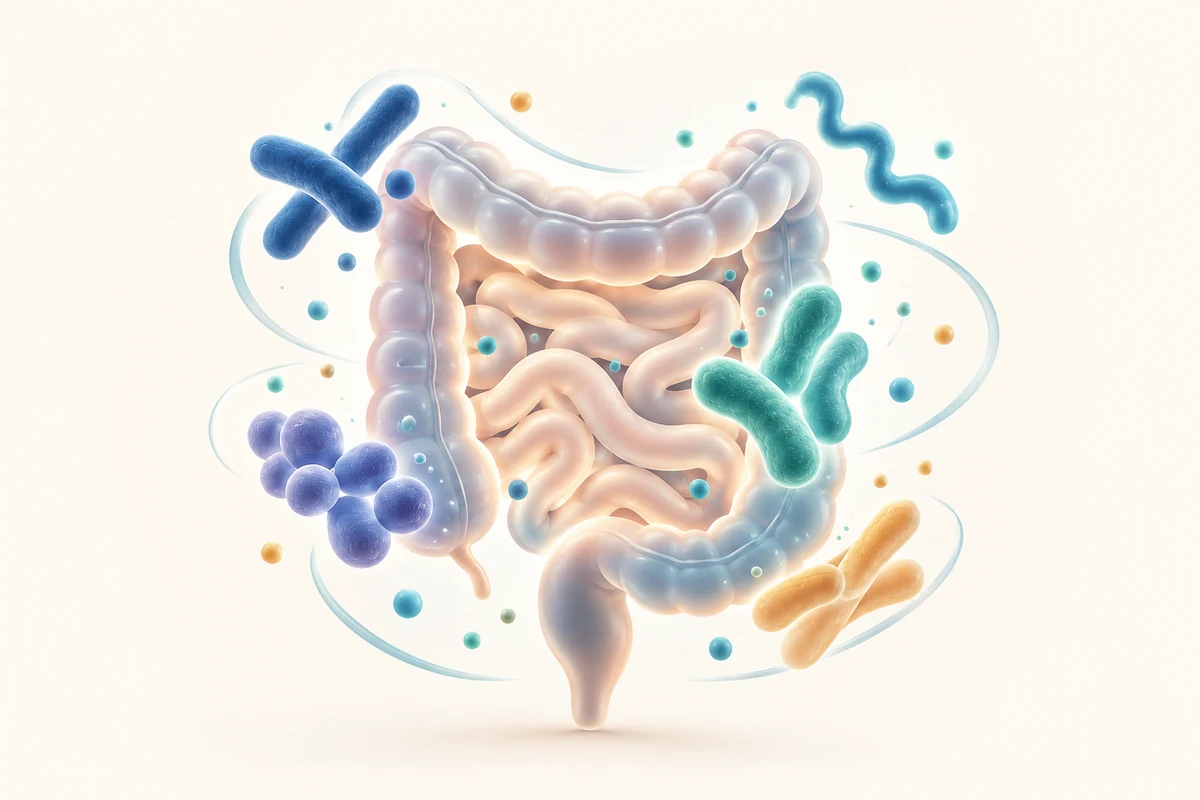
Gut microbiota is the community of microorganisms living in the intestine.
Probiotics are live microorganisms that provide a health benefit when taken in adequate amounts.
Prebiotics are substrates selectively used by host microorganisms that provide a health benefit.
These three related concepts describe different parts of the gut ecosystem.
Start with the basics
What Are Probiotics? How Do They Interact with the Gut Microbiota?
Learn the definition of probiotics, their relationship with the microbiota, CFU and how scientific evidence is assessed.
What Is Gut Flora and Why Does It Matter?
Explore how the microbiota, commonly called “gut flora”, develops through diversity, function and interactions.
Everyday digestive questions
What Causes Gas and Bloating?
Learn the difference between gas, bloating and abdominal distension, and the roles of fermentation, gut motility and microbiota.
When Are Probiotics Used?
Explore why “In which situation?” and “At what time of day?” need separate consideration for probiotics.
How Are Probiotics Assessed During Antibiotic Use?
Explore strain selection, timing, the approximately two-hour interval approach and findings from probiotic research during antibiotic use.
Core concepts in probiotic science
What Is the Difference Between Probiotics and Prebiotics?
Learn the difference between a live microorganism and a microbial substrate, and the concept of synbiotics.
What Is the Gut Barrier?
Explore the roles of mucus, epithelial cells and tight junction proteins in intestinal integrity.
What Is a Probiotic Strain?
Learn the distinction between species and strain, and how clinical outcomes are assessed alongside strain identity.
What Does Multi-Strain Probiotic Mean?
Explore how strain selection, amount and evidence are assessed together in multi-strain formulas.
What Is Inulin?
Learn about inulin's prebiotic properties, fermentation and the rationale for combining it with probiotics.
Childhood and early life
What to Know About Probiotic Use in Children
Explore age suitability, strain, dose and safety using a scientific standard appropriate to children.
How Does the Gut Microbiota Develop in Infants?
Discover the roles of birth, feeding, antibiotics and Bifidobacterium species in early-life microbiota.
How do we interpret probiotic science?
Probiotic research considers strain identity, dose, population and formulation together. Human studies explain clinical outcomes, preclinical studies explain mechanisms, and combination studies explain the rationale for using strains together.
Studies of the same strain establish its direct research history; species- and combination-level studies complement the broader scientific background of the probiotic approach.
Related Vitallin products
For product information on this topic, visit the relevant product pages:
The Knowledge Centre provides scientific education; product pages present the product's actual specifications.
References
- Hill C, Guarner F, Reid G, et al. Nature Reviews Gastroenterology & Hepatology. 2014;11:506-514. DOI: 10.1038/nrgastro.2014.66.
- Gibson GR, Hutkins R, Sanders ME, et al. Nature Reviews Gastroenterology & Hepatology. 2017;14:491-502. DOI: 10.1038/nrgastro.2017.75.