
KNOWLEDGE CENTRE · ARTICLE
What Is Inulin? Why Is It Combined with Probiotics?
Inulin is dietary fibre that can reach the large intestine largely undigested, where it is fermented. Its prebiotic properties stem from selective use by beneficial groups such as Bifidobacterium.
Adding inulin combines live bacteria with supporting prebiotic components. This explains inulin in Enteromax Capsules and Sachets.
The short answer
Inulin is a well-defined prebiotic fructan. It can reach the large intestine largely undigested and be fermented by specific microorganisms.[1]
Its use in probiotic products can combine live microorganisms and a prebiotic substrate.
Interactions vary by strain, dose and formulation; some combinations are therefore studied separately.
Which foods contain inulin?
Inulin occurs in various plants.
Common sources include:
- chicory root,
- Jerusalem artichoke,
- onion,
- garlic,
- leek,
- asparagus
Inulin in supplements and functional foods is generally purified from plant sources.
Why is inulin a prebiotic?
Besides resisting digestion, prebiotic status requires selective use by host microorganisms and association with a health benefit.[1]
Inulin-type fructans have extensive literature supporting these criteria.
Fermentation can produce metabolites including short-chain fatty acids.
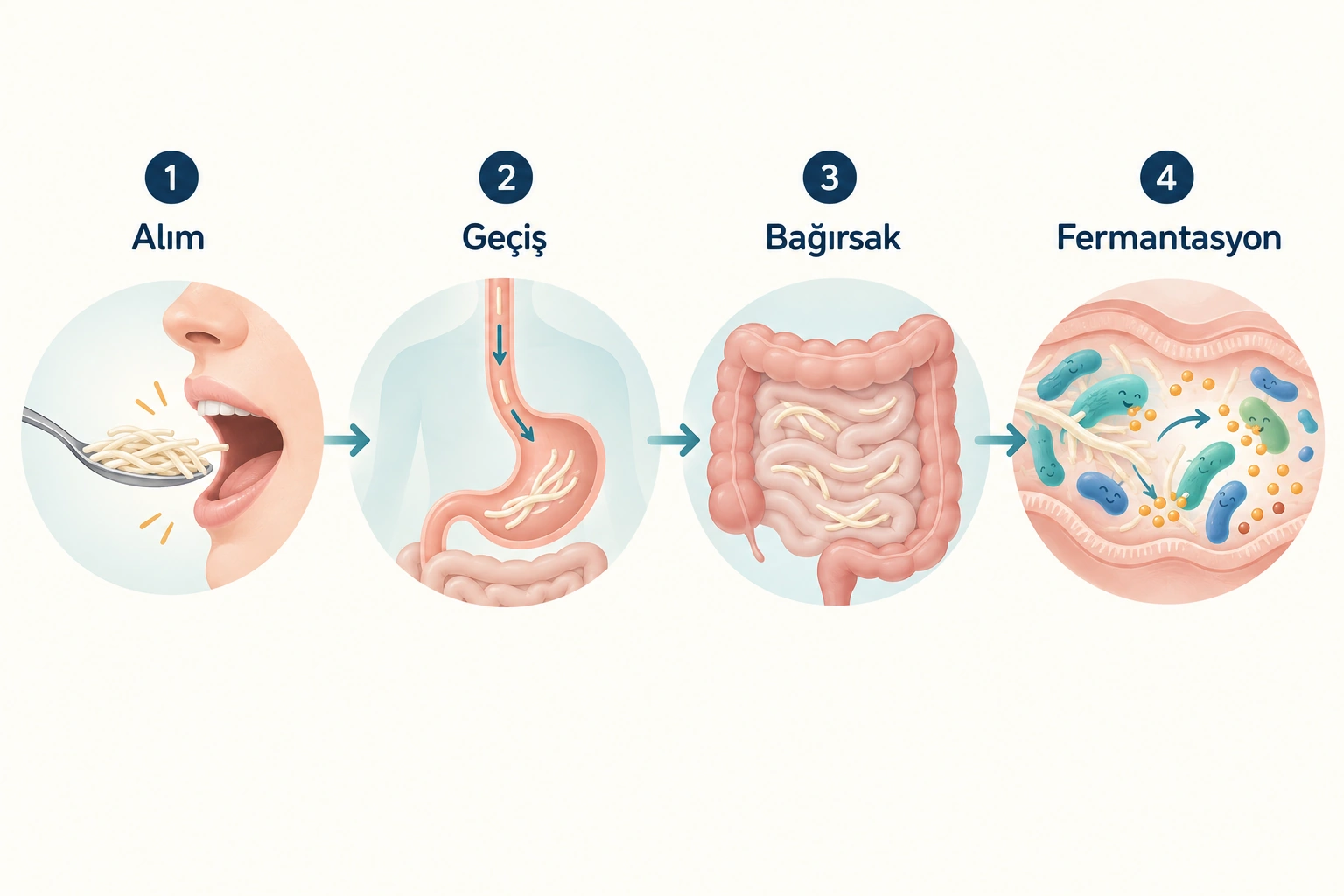
How does inulin work in the gut?
1. Incomplete digestion in the small intestine
Human enzymes cannot fully break down inulin.
2. Arrival in the large intestine
This makes it available for microbial metabolism.
3. Microbial fermentation
Certain gut bacteria use it as an energy source.
4. Ecosystem and metabolite changes
This may change composition and metabolites such as short-chain fatty acids.
Why is inulin combined with probiotics?
Probiotics and prebiotics work differently.
- Probiotics supply live microorganisms.
- Inulin supplies a substrate certain microorganisms can use.
Combining them is therefore a biologically complementary formulation idea.
This unites microorganisms and substrate; clinical synergy is assessed through combination-specific research.
How has inulin been studied in humans?
Ford and colleagues' 2020 study in older women on a high-protein diet assessed:
- multi-strain probiotics,
- 5.6 g/day inulin,
- probiotic + inulin combinations
These were assessed in separate intervention groups.[2]
Outcomes included stability, gastrointestinal tolerance and well-being.
This supplies human data for combining probiotics and inulin. The strains and 5.6 g/day belong to the study protocol; Enteromax amounts are separately stated on its label.
Lp90 and prebiotic metabolism
For Lactiplantibacillus plantarum Lp90 in Enteromax, in vitro data investigate FOS metabolism.
Dong and colleagues' 2023 study reported Lp90 metabolising FOS and showing synergistic growth with B. longum BL21 in co-culture.[3]
This directly matched Lp90 in vitro study helps explain prebiotic metabolism. Its substrate is FOS, structurally related to but assessed separately from inulin.
How is inulin included in daily nutrition?
Inulin is fibre used for microbiota support through prebiotic properties. Fermentation contributes to metabolites such as short-chain fatty acids.
Gradual increases in fibre and adequate water may aid comfort. Follow serving information when using an inulin supplement.
Is inulin fibre?
Yes. It is soluble, fermentable dietary fibre.
Its scientific interest comes from studied prebiotic properties alongside its fibre structure.
Are inulin and FOS the same?
They are structurally related fructans. FOS generally means shorter-chain fructooligosaccharides; inulin may have a longer chain distribution.
Studies are interpreted according to fructan structure and chain length.
Conclusion
In summary: Inulin is a fermentable fructan with well-defined prebiotic properties.[1]
What this means in daily life: Combining it with probiotics brings microorganisms and supporting substrate into one formulation approach.
What research shows: Tolerance varies by dose and individual; outcomes are assessed by strain, substrate and amount.
Explore more: For differences between these groups, read What Is the Difference Between Probiotics and Prebiotics?
Frequently Asked Questions
Is inulin a prebiotic?
Yes. Inulin-type fructans are among the most studied prebiotic ingredients.[1]
Is inulin a probiotic?
Unlike live microorganism probiotics, inulin is a prebiotic substrate.
Can inulin cause gas?
It may increase gas and bloating, especially at high amounts, in some people.
Can inulin be taken with probiotics?
Yes. Combined formulations and clinical studies exist.[2]
Does inulin feed all probiotic bacteria?
Substrate use varies by species and strain; its effects are assessed with these biological properties.
Related Vitallin products
To explore Vitallin probiotic formulas containing inulin:
visit the product pages.
Enteromax Capsules and Sachets contain inulin alongside strains. Current amounts are in each composition table.
Information Note
This content is for general information and educational purposes. It is not a substitute for medical advice, diagnosis or treatment. Consult your physician or the relevant healthcare professional for an assessment of your personal health.
This content is for general information and education.
References
- Gibson GR, Hutkins R, Sanders ME, et al. ISAPP consensus statement on the definition and scope of prebiotics. Nature Reviews Gastroenterology & Hepatology. 2017;14:491-502. DOI: 10.1038/nrgastro.2017.75.
- Ford AL, Nagulesapillai V, Piano A, et al. Microbiota Stability and Gastrointestinal Tolerance in Response to a High-Protein Diet with and without a Prebiotic, Probiotic, and Synbiotic. Journal of the Academy of Nutrition and Dietetics. 2020;120(4):500-516.e10. DOI: 10.1016/j.jand.2019.12.009.
- Dong et al. Lactiplantibacillus plantarum Lp90 and fructooligosaccharide metabolism / co-culture interaction with Bifidobacterium longum. 2023. DOI: 10.1007/s10123-023-00446-x.