
KNOWLEDGE CENTRE · ARTICLE
What Is Gut Flora and Why Does It Matter?
Gut flora, medically known as the gut microbiota, is the living ecosystem of microorganisms in the digestive tract. Diet, daily routines and certain medications can influence this community. A holistic view of gut balance considers the ecosystem's diversity and functions rather than a single bacterium.
The short answer
Gut flora, or more accurately gut microbiota, is the ecosystem of microorganisms living in the intestine. “Microbiota” refers to the microorganisms in an ecosystem; “microbiome” is used as a broader concept that also includes the community's genetic elements.[1]
Gut microbiota varies between individuals. Age, diet, lifestyle, environmental conditions and medications such as antibiotics can affect its structure.[2]
The importance of the gut microbiota is understood by considering microbial diversity, metabolic activities, the gut barrier and the ecosystem's overall balance together.
Gut flora or gut microbiota?
“Gut flora” has been established in everyday language for many years. Historically, however, “flora” describes plant communities.
In current scientific usage, microbiota is a more accurate term for the community of microorganisms living in a given environment.[1]
“Gut flora” is common in everyday language; scientific discussion prefers gut microbiota for the same ecosystem.
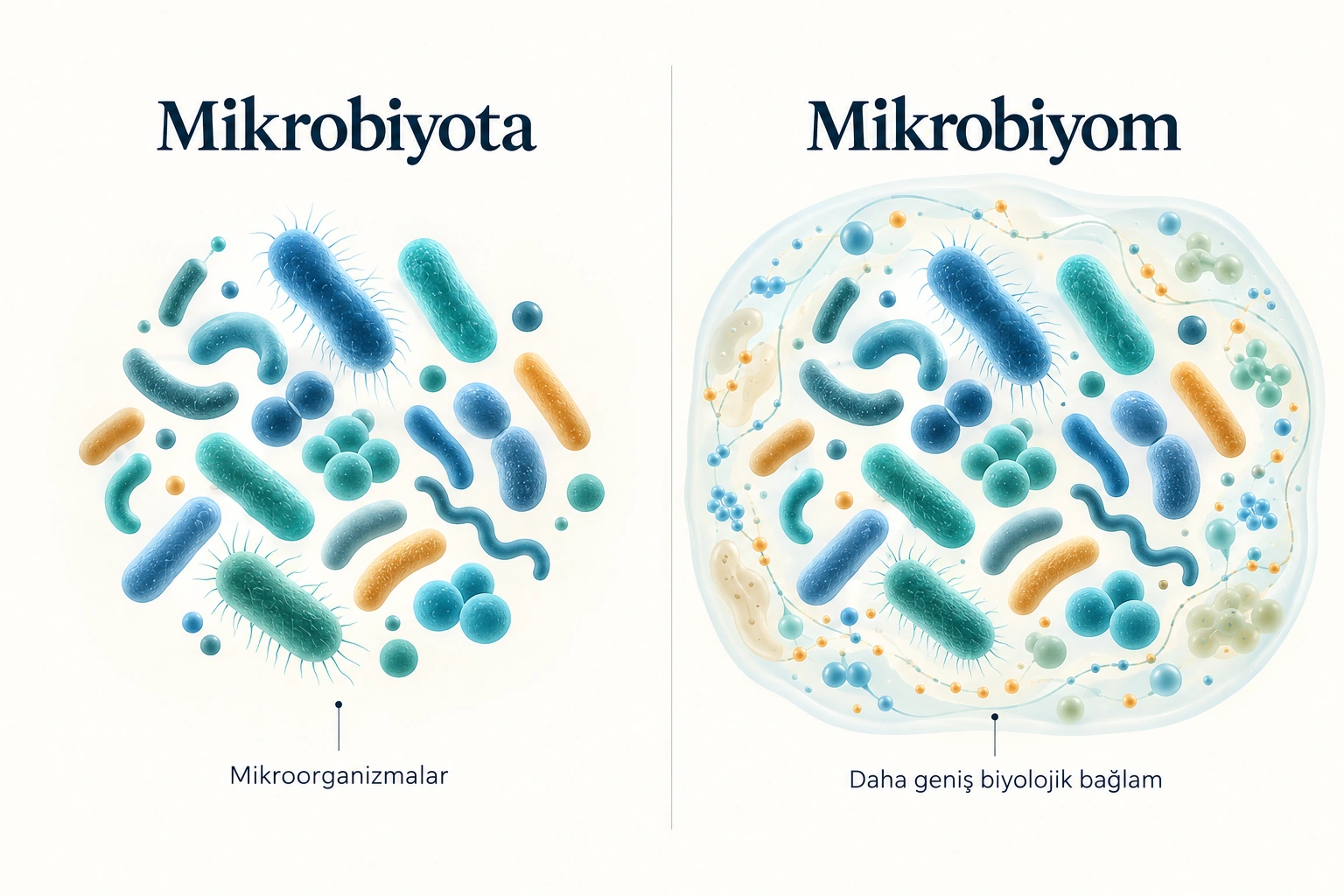
Are microbiota and microbiome the same?
The concepts are related but differ in scope.
- Microbiota: The community of microorganisms in an ecosystem.
- Microbiome: A concept covering these microorganisms' genetic material and broader biological context.
Although the terms are sometimes used interchangeably, keeping this distinction is more accurate in scientific content.[1]
Why does the gut microbiota matter?
The gut microbiota is an ecosystem continuously interacting with the intestinal surface, nutrients, gut barrier and immune system.
The 2026 ISAPP consensus on gut health considers it a multidimensional system comprising digestion and absorption, the microbiome, gut barrier, immunity and gastrointestinal symptoms affecting quality of life.[3]
Assessing “healthy gut flora” therefore includes the ecosystem's function and the person's gastrointestinal condition alongside the amounts of specific bacteria.
1. Contribution to nutrient metabolism
Gut microorganisms can metabolise some food components that human digestive enzymes cannot fully break down.
This process can produce microbial metabolites such as short-chain fatty acids (SCFAs). Acetate, propionate and butyrate are among the most frequently studied in this group.
These metabolites are actively investigated for their relationships with intestinal cells, barrier integrity and immune signalling.[3]
A human study of LRa05 in healthy volunteers assessed short-chain fatty acids alongside microbiota composition.[4]
2. Relationship with the gut barrier
The intestinal surface forms a controlled boundary between the gut contents and the body's internal environment.
The mucus layer, epithelial cells and intercellular tight junctions are fundamental parts of this barrier.
The gut microbiota and its metabolites can interact with biological processes related to barrier integrity. The 2026 ISAPP consensus also links microbial metabolites to barrier integrity, immune responses and mucus turnover.[3]
Explore this relationship in more detail in “What Is the Gut Barrier? Why Do Tight Junctions Matter?”
3. Balance of the microbial ecosystem
Gut microorganisms form an ecosystem through continuous interaction.
They share the same environment and nutrient sources; some use substances produced by others, while some compete for the same ecological niche.
Assessing the microbiota therefore places greater emphasis on community structure, diversity and stability over time than on the presence of individual microorganisms.
A randomised, double-blind, placebo-controlled study of older women investigated probiotic, prebiotic and synbiotic interventions in relation to microbiota stability and gastrointestinal tolerance during a high-protein diet.[5] This is one source of human data assessing microbiota stability during dietary changes.
4. Interaction with other microorganisms
The gut microbiota functions as an ecological community.
Growth or decline of specific microorganisms, or changes in environmental conditions, may affect other members. Studies therefore investigate both which bacteria are present and how microbial composition changes over time.
Does everyone have the same gut flora?
Gut microbiota is individual-specific. Its composition can vary substantially even among healthy people.
A comprehensive 2019 review showed that many factors relate to microbiota composition, from age, delivery mode and early-life nutrition to antibiotics, diet, physical activity and lifestyle.[2]
This diversity is an important feature of the gut microbiota as an individual-specific, dynamic ecosystem.
Current research shows that healthy microbiomes can vary between individuals. Alongside microorganism identity, assessment therefore considers a broader picture including function, stability, metabolites, the gut barrier and the person's gastrointestinal condition.[3]
What can affect the gut microbiota?
The gut microbiota is a dynamic ecosystem that can change throughout life under various influences.
Diet
Diet directly affects the nutrient sources available to gut microorganisms.
Fibre content, protein intake and dietary variety relate to the microbial ecosystem. For example, Ford and colleagues assessed high-protein diet-related changes in some butyrate producers and the relationship of probiotic and synbiotic approaches with microbiota stability in that setting.[5]
These findings show that the diet–microbiota relationship is dynamic and individual-dependent; diets are assessed in this context.
Age and life stage
The microbiota starts developing early in life and may change throughout life.
Delivery mode, feeding and environmental contacts in infancy, diet and lifestyle in adulthood, and physiological and environmental changes in older age all relate to microbiota structure.[2]
Explore early-life microbiota development in “How Does the Gut Microbiota Develop in Infants?”
Antibiotics and some medications
Antibiotics act on susceptible bacteria. They may therefore affect gut microbiota members as well as the target microorganisms being treated.
Antibiotic use has long been studied as a factor capable of changing gut microbiota composition.[2]
This subject will be discussed, with its context of use, in “How Are Probiotics Assessed During Antibiotic Use?”
Lifestyle and environmental factors
Physical activity, geographical environment, cultural dietary habits and daily routines are also associated with microbiota differences.[2]
Most of these relationships are multifactorial; lifestyle changes are assessed alongside other influences on the microbiota.
What does “balanced gut flora” mean?
Although useful in everyday language, this expression needs careful scientific use.
Microbiota balance is assessed alongside diversity, function, metabolic activity and the ecosystem's ability to adapt to changing conditions. Composition may differ substantially between healthy people.[2][3]
A more meaningful approach considers the gut ecosystem's function, stability, metabolic activities and relationship with the intestinal environment together.
Here, balance means a functioning microbial ecosystem capable of adapting to changing conditions.
Are probiotics part of the gut flora?
Gut microbiota means the existing microorganism ecosystem, while probiotics are specific live microorganisms used for a health benefit.
The gut microbiota is the broad microorganism community in the intestine. Probiotics are specific live microorganisms that provide a health benefit when used in adequate amounts.
How a consumed probiotic interacts with the gut ecosystem may vary by species, strain, amount and formulation.
The article “What Are Probiotics? How Do They Interact with the Gut Microbiota?” is a core guide in this topic cluster.
How can gut flora be supported?
Supporting gut flora involves more than a single product or food.
Gut health is a broader concept. Current consensus recommends considering the microbiome, barrier and other physiological processes alongside normal gastrointestinal function, symptoms and quality of life.[3]
In daily life:
- dietary variety,
- adequate dietary fibre,
- lifestyle habits suited to the individual,
- following healthcare professionals' advice on avoiding unnecessary antibiotics
are general approaches that can be considered in relation to the microbiota.
Probiotic or prebiotic use should not be reduced to a single claim such as “restoring the gut flora”. The microorganism's species, strain, amount and scientific evidence should be considered together.
Conclusion
In summary: The gut microbiota is a dynamic ecosystem involving microorganism identity, metabolites, barrier relationships and responses to diet.[2][3]
What this means in daily life: A varied diet, regular habits and monitoring individual tolerance form the daily foundation for supporting this ecosystem.
What research shows: Gut health assessment considers microbial composition, function, metabolites, the barrier and the person's gastrointestinal condition together.[3]
Explore more: To understand how live microorganisms are introduced into this ecosystem, read What Are Probiotics?
Frequently Asked Questions
Are gut flora and gut microbiota the same?
In everyday language, they usually refer to the same concept. Scientifically, microbiota is the more accurate, current term for the microorganism community in a given ecosystem.[1]
What is the difference between microbiota and microbiome?
Microbiota refers to the microorganisms themselves; microbiome includes their genetic elements and broader biological context.[1]
Does everyone have the same gut flora?
Healthy people's microbiota compositions can differ because of factors including age, diet, environment, lifestyle and antibiotic use.[2]
Does gut flora change over time?
Yes. The microbiota can change throughout life under influences such as diet, medications and living conditions.[2]
Which bacteria should healthy gut flora contain?
Healthy microbiota profiles vary between individuals. Rather than a specific “ideal bacteria list”, current assessment considers composition alongside function and gastrointestinal condition.[3]
Does probiotic use permanently change gut flora?
Probiotic effects can vary by strain, dose, duration, existing microbiota and outcome studied. Studies are therefore assessed in relation to the strain and context of use.
Related Vitallin products
To explore Vitallin's probiotic formulas while learning about gut microbiota and probiotics, visit the Enteromax product family.
Composition and directions for the Enteromax family are available on the relevant product pages.
Information Note
This content is for general information and educational purposes. It is not a substitute for medical advice, diagnosis or treatment. Consult your physician or the relevant healthcare professional for an assessment of your personal health.
References
- Gibson GR, Hutkins R, Sanders ME, et al. Expert consensus document: The International Scientific Association for Probiotics and Prebiotics (ISAPP) consensus statement on the definition and scope of prebiotics. Nature Reviews Gastroenterology & Hepatology. 2017;14:491-502. DOI: 10.1038/nrgastro.2017.75.
- Rinninella E, Raoul P, Cintoni M, et al. What is the Healthy Gut Microbiota Composition? A Changing Ecosystem across Age, Environment, Diet, and Diseases. Microorganisms. 2019;7(1):14. DOI: 10.3390/microorganisms7010014. PMID: 30634578.
- Marco ML, Cunningham M, Bischoff SC, et al. The International Scientific Association for Probiotics and Prebiotics (ISAPP) consensus statement on the definition and scope of gut health. Nature Reviews Gastroenterology & Hepatology. 2026;23:432-448. DOI: 10.1038/s41575-026-01176-x. PMID: 41709019.
- Gai Z, Dong Y, Xu F, et al. Changes in the gut microbiota composition of healthy young volunteers after administration of Lacticaseibacillus rhamnosus LRa05: A placebo-controlled study. Frontiers in Nutrition. 2023;10:1105694. DOI: 10.3389/fnut.2023.1105694.
- Ford AL, Nagulesapillai V, Piano A, et al. Microbiota Stability and Gastrointestinal Tolerance in Response to a High-Protein Diet with and without a Prebiotic, Probiotic, and Synbiotic: A Randomized, Double-Blind, Placebo-Controlled Trial in Older Women. Journal of the Academy of Nutrition and Dietetics. 2020;120(4):500-516.e10. DOI: 10.1016/j.jand.2019.12.009. PMID: 32199523.