
KNOWLEDGE CENTRE · ARTICLE
How Does Memory Work and What Affects It?
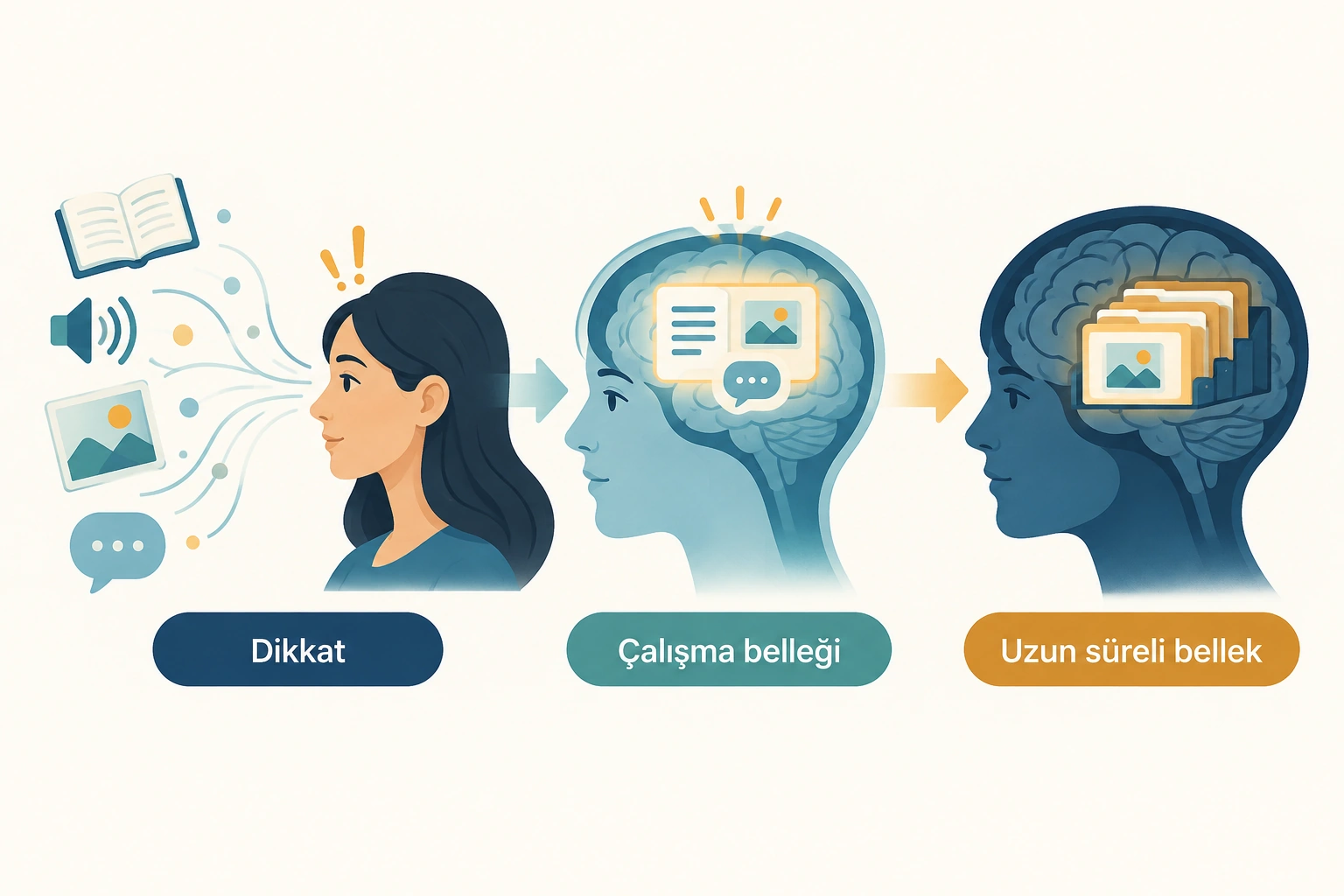
Memory involves encoding, storing and retrieving information. These processes relate closely to neuronal connections and synaptic communication. Working memory supports everyday mental tasks, while long-term memory retains learned information.
Lion's mane research examines cognition, learning, recall and flexibility of neuronal connections. Vitallin Lion's Mane Mushroom offers a holistic approach aimed at supporting working and long-term memory through neuronal connections.
The short answer
Memory can be considered in three stages:
- Encoding: Receiving and processing information.
- Storage: Preserving information over time.
- Retrieval: Accessing information when needed.
Without sufficient attention, encoding may be weak. What feels like a memory problem may actually be insufficient attention when receiving information.
Learning and memory relate closely to the brain's ability to change through experience, or neuroplasticity.[1]
Short- and long-term memory
Memory comprises different systems.
Working memory
Holds information briefly while processing it.
Examples include holding a phone number or calculating mentally.
Long-term memory
Systems storing information for hours, days or years.
Memories, knowledge and skills relate to different long-term systems.
Is attention the gateway to memory?
Largely, yes.
Insufficient attention makes strong encoding harder.
For this reason:
- multitasking,
- notifications,
- intense stress,
- lack of sleep,
- mental fatigue
can indirectly affect memory.
Why does sleep affect memory?
Sleep is linked to processing and consolidating learned information.
Insufficient sleep affects learning and subsequent recall.
Sleep is therefore foundational to memory support.
Does memory change with age?
Some cognitive processes can change with age.
Recalling names or learning new information may take longer.
Some changes occur with age; rapid progression or substantial effects on daily function need separate assessment.
Memory and neuroplasticity
Learning creates nervous system changes.
New synapses, stronger connections and weakening unused connections are part of neuroplasticity.[1]
Learning therefore changes brain connectivity as well as storing information.
Why is lion's mane included in memory research?
Hericium erinaceus is investigated because of neurotrophic factor and neuroplasticity mechanisms.
Saitsu's small RCT reported improved visual memory tests in healthy older adults.[2]
Mori's human study reported favourable cognitive scores versus placebo over 16 weeks, an important example of lion's mane human evidence.[3]
These provide favourable clinical signals supporting its place in memory and cognition research.
When should forgetfulness be taken seriously?
Forgetfulness requires assessment if it:
- disrupts daily tasks,
- causes frequent getting lost or navigation problems,
- involves substantial speech or language changes,
- progresses rapidly,
- occurs with personality changes
Conclusion
In summary: Memory combines attention, working memory and long-term memory to encode, store and retrieve information.
What this means in daily life: Sleep, repetition, attention management and learning methods are everyday tools supporting memory.
What research shows: Lion's mane human studies investigate cognition and memory using varied samples and preparations.
Explore more: To see how learning changes the brain, read What Is Neuroplasticity?
Frequently Asked Questions
Are memory and attention the same?
They are different processes; insufficient attention may weaken encoding and feel like a memory problem.
Does lack of sleep cause forgetfulness?
It can affect learning, attention and recall.
Is age-related forgetfulness normal?
Some slowing may be normal; progressive changes affecting daily function need assessment.
Does lion's mane improve memory?
Small human studies have reported favourable cognitive test findings.[2][3] Findings are assessed in preparation and population context.
Related Vitallin product
Lion's Mane Mushroom 60-tablet product page. Its formula contains Hericium erinaceus extract, investigated in memory and neuroplasticity research.
Information Note
This content is for general information and educational purposes. It is not a substitute for medical advice, diagnosis or treatment. Consult your physician or the relevant healthcare professional for an assessment of your personal health.
References
- National Institutes of Health / NCBI Bookshelf. Information about the Brain: Plasticity and Learning.
- Saitsu Y, et al. Biomedical Research. 2019;40(3):125-131. DOI: 10.2220/biomedres.40.125.
- Mori K, et al. Phytotherapy Research. 2009;23(3):367-372. DOI: 10.1002/ptr.2634.