
KNOWLEDGE CENTRE · ARTICLE
What Are NGF and BDNF? What Do They Do in the Brain?
Lion's mane bioactives have been studied for NGF/BDNF-related pathways. Erinacine mechanisms, particularly associated with mycelium, help explain nervous system research interest. They connect neuronal viability, synaptic communication, memory and neuroplasticity in one scientific framework.
The short answer
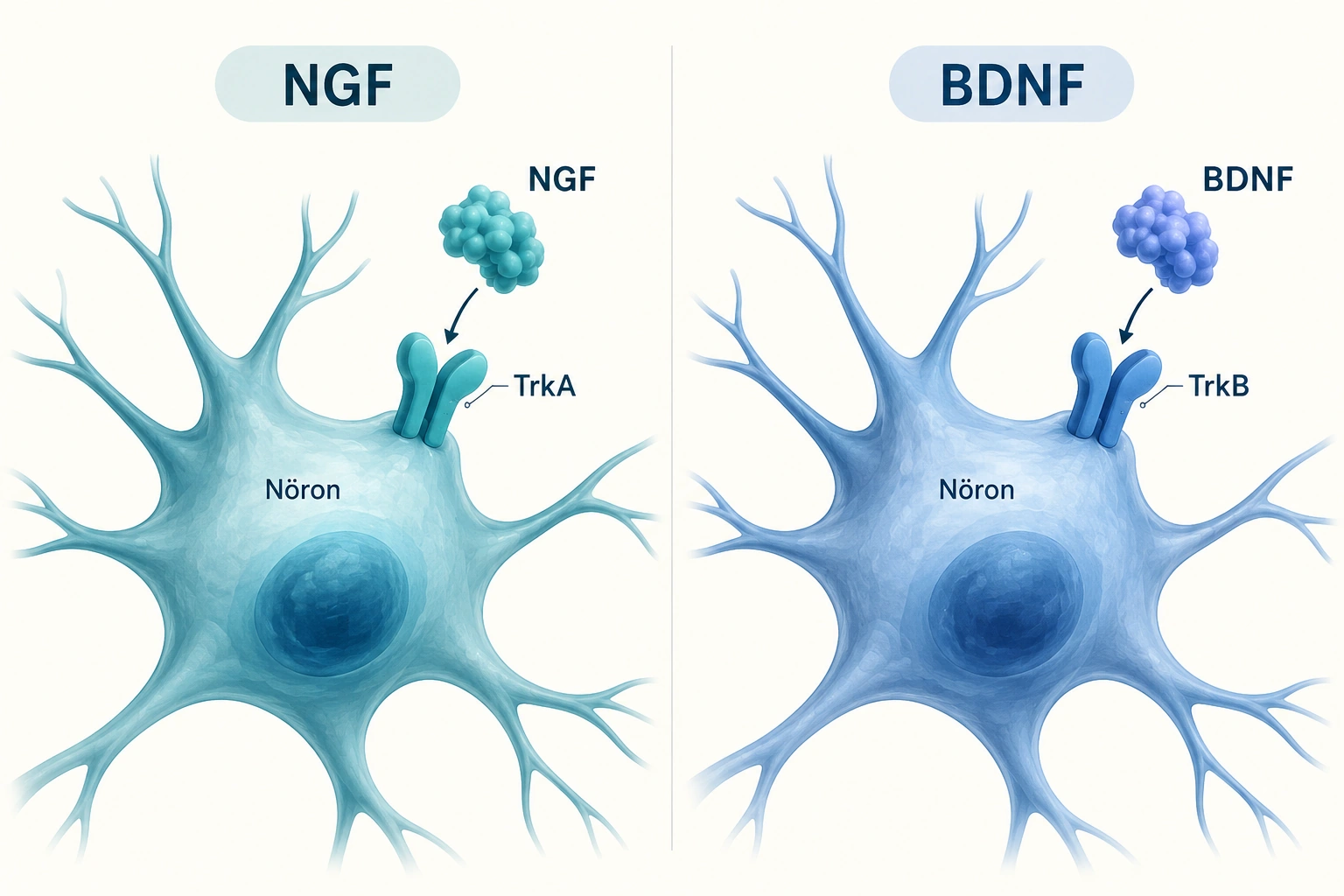
NGF (Nerve Growth Factor) and BDNF (Brain-Derived Neurotrophic Factor) are proteins related to neuronal survival, development, synaptic function and plasticity.[1]
They are distinct proteins associated with different receptor pathways and neuronal systems.
Blood measurements inform biology; functional clinical outcomes require cognitive tests and other measures.
What is NGF?
NGF was one of the first neurotrophins identified.
It particularly relates to survival and development of certain peripheral and central neurons.
The TrkA receptor matters in NGF effects.
What is BDNF?
It is a widely studied neurotrophic factor in brain tissue.
In particular:
- learning,
- memory,
- synaptic plasticity,
- neuronal development
are related processes.[1]
One main receptor is TrkB.
Why do neurotrophins matter?
Neurons are dynamic cells participating in growth, connectivity and adaptation alongside electrical signalling.
They use complex molecular signals for survival, connection changes and adaptation.
Neurotrophins belong to these networks.
How are NGF and BDNF related to memory?
BDNF relates closely to learning and plasticity; NGF to specific neuronal survival and development. Blood measures inform biology; memory and cognition also require tests and functional outcomes.
Why is NGF prominent in lion's mane research?
Hericium erinaceus Sources of
- fruiting body hericenones,
- mycelium erinacines
have been investigated for NGF and other pathways.
Preclinical studies explain effects involving TrkA/TrkB, neurite outgrowth and neurogenesis.
This is a major reason for scientific interest in lion's mane.
Are human BDNF data available?
Vigna's 2019 study of overweight/obese individuals using Hericium erinaceus reported increased pro-BDNF levels without a substantial change in mature BDNF.[2]
Pro-BDNF and mature BDNF are distinct molecular forms at different stages, helping explain the neurotrophic mechanism in more detail.
What do mechanistic and human data tell us together?
Cell/preclinical studies explain pathways; human studies assess cognition and markers. Together they clarify research interest in lion's mane.
Conclusion
In summary: NGF and BDNF are distinct proteins associated with neuronal survival, connections and plasticity.
What this means in daily life: They help explain the biological foundation of learning and adaptation.
What research shows: Markers provide broader information when assessed with cognitive tests.
Explore more: For related pathway research, read What Is Lion's Mane Mushroom?
Frequently Asked Questions
What does NGF mean?
Nerve Growth Factor.
What does BDNF mean?
Brain-Derived Neurotrophic Factor.
Are NGF and BDNF the same?
They are different proteins in the neurotrophin family.
Does lion's mane increase NGF?
Preclinical studies show certain Hericium compounds' relationships with NGF pathways. Human research continues assessing links with cognition and markers.
What does a BDNF level tell us?
BDNF relates to learning and neuronal connections. Biomarkers assessed with cognitive tests offer a broader framework for brain function.
Related Vitallin product
Lion's Mane Mushroom 60-tablet product page. Its Hericium erinaceus extract gains scientific context through NGF/BDNF mechanism research.
Information Note
This content is for general information and educational purposes. It is not a substitute for medical advice, diagnosis or treatment. Consult your physician or the relevant healthcare professional for an assessment of your personal health.
References
- Keefe KM, Sheikh IS, Smith GM. Targeting Neurotrophins to Specific Populations of Neurons: NGF, BDNF, and NT-3. International Journal of Molecular Sciences. 2017;18(3):548. DOI: 10.3390/ijms18030548.
- Vigna L, et al. Hericium erinaceus improves mood and sleep disorders in patients affected by overweight or obesity: could circulating pro-BDNF and BDNF be potential biomarkers? 2019. DOI: 10.1155/2019/7861297.
- Spangenberg ET, et al. Frontiers in Pharmacology. 2025;16:1582081. DOI: 10.3389/fphar.2025.1582081.