
KNOWLEDGE CENTRE · ARTICLE
What Is Neuroplasticity? The Brain's Ability to Change and Learn
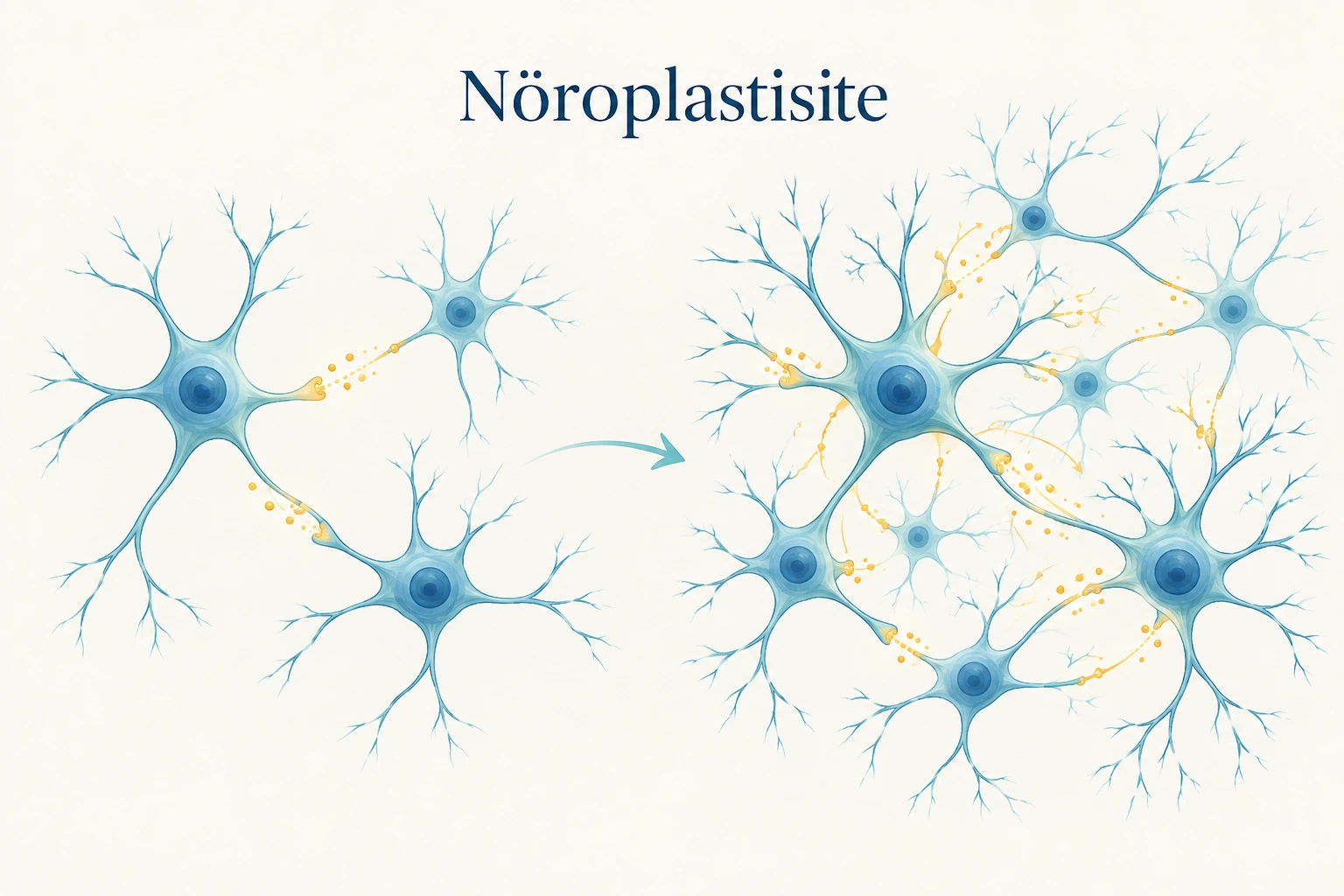
Neuroplasticity is the brain's ability to reorganise neuronal connections in response to experience, learning and environmental change. Memory and learning relate closely to this flexibility.
Lion's mane bioactives such as erinacines and hericenones are studied through neurotrophic and synaptic flexibility mechanisms. Vitallin Lion's Mane Mushroom focuses on supporting neuroplasticity, memory and synaptic flexibility associated with learning and adaptation.
The short answer
Neuroplasticity is the nervous system's capacity to reorganise structure, function and connections in response to internal and external stimuli.[1]
Changes can include:
- strengthening or weakening synapses,
- forming new connections,
- reorganising networks
at different levels.
Learning and memory are visible everyday examples.
Does neuroplasticity continue throughout life?
Yes. Childhood plasticity is high; adults retain the capacity to change.
New skills, languages and repeated motor tasks relate to neural network changes.[1][2]
What is synaptic plasticity?
Synapses are communication points between neurons.
Repeated use can strengthen some synapses; less-used connections can weaken.
These dynamic changes matter for learning and memory.
How does neuroplasticity support learning and development?
It is the biological basis of learning and adaptation. New information, repeated skills and different working methods can reorganise connections.
Flexibility matters for lasting learning, linking experience and memory, and adaptation. Mental activity, movement, sleep and repetition are supporting habits. [1]
Why are NGF and BDNF discussed here?
Neurotrophins such as NGF and BDNF relate to:
- neuronal survival,
- synaptic function,
- axon growth,
- plasticity
.[3]
They therefore frequently feature in research.
Lion's mane and neuroplasticity
Hericium erinaceus research investigates hericenone/erinacine links with neurotrophic pathways, particularly preclinically.
Research covers:
- NGF/BDNF stimulation,
- TrkA/TrkB pathways,
- neurite outgrowth,
- neurogenesis,
- synaptic flexibility
Mechanistic findings guide research; human cognitive clinical effect sizes require human studies.
What do human studies show?
Cognition and neurotrophic markers have been assessed differently. Saitsu and Mori reported favourable cognitive scales.[4][5]
Vigna reported increased circulating pro-BDNF without a substantial change in mature BDNF.[6] This is a developing field combining preclinical mechanisms and human cognition.
How is neuroplasticity supported daily?
Its fundamental stimulus is learning and experience.
New skills, repetition, activity, sleep and challenging cognitive tasks matter for a healthy nervous system.
These form the holistic foundation; investigated support ingredients may accompany it.
Conclusion
In summary: The brain retains lifelong capacity to form and reorganise connections; learning is an everyday example.
What this means in daily life: Regular learning, sleep, movement and repetition support adaptation holistically.
What research shows: Lion's mane mechanisms and human cognition findings are complementary ways to understand neuroplasticity.
Explore more: For the neurotrophic factors mentioned, read What Are NGF and BDNF?
Frequently Asked Questions
What does neuroplasticity mean?
The capacity to change nervous system structure, function or connectivity through experience and stimuli.
Do adults have neuroplasticity?
Yes. Adult brains can change through learning and experience.
Is neuroplasticity related to memory?
Yes. Learning and memory relate closely to synaptic change.
Does lion's mane increase neuroplasticity?
Preclinical findings support neurotrophic/synaptic mechanisms, while human studies develop this area through cognition and markers.
Related Vitallin product
Lion's Mane Mushroom 60-tablet product page. Hericium erinaceus belongs in this framework because of research into neurotrophic pathways and cognition.
Information Note
This content is for general information and educational purposes. It is not a substitute for medical advice, diagnosis or treatment. Consult your physician or the relevant healthcare professional for an assessment of your personal health.
References
- Margetis K, Vadakekut ES. Neuroplasticity. StatPearls / NCBI Bookshelf. Updated 2026.
- NIH Curriculum Supplement Series. Plasticity and Learning. NCBI Bookshelf.
- Keefe KM, Sheikh IS, Smith GM. Targeting Neurotrophins to Specific Populations of Neurons: NGF, BDNF, and NT-3. International Journal of Molecular Sciences. 2017;18(3):548. DOI: 10.3390/ijms18030548.
- Saitsu Y, et al. DOI: 10.2220/biomedres.40.125.
- Mori K, et al. DOI: 10.1002/ptr.2634.
- Vigna L, et al. DOI: 10.1155/2019/7861297.